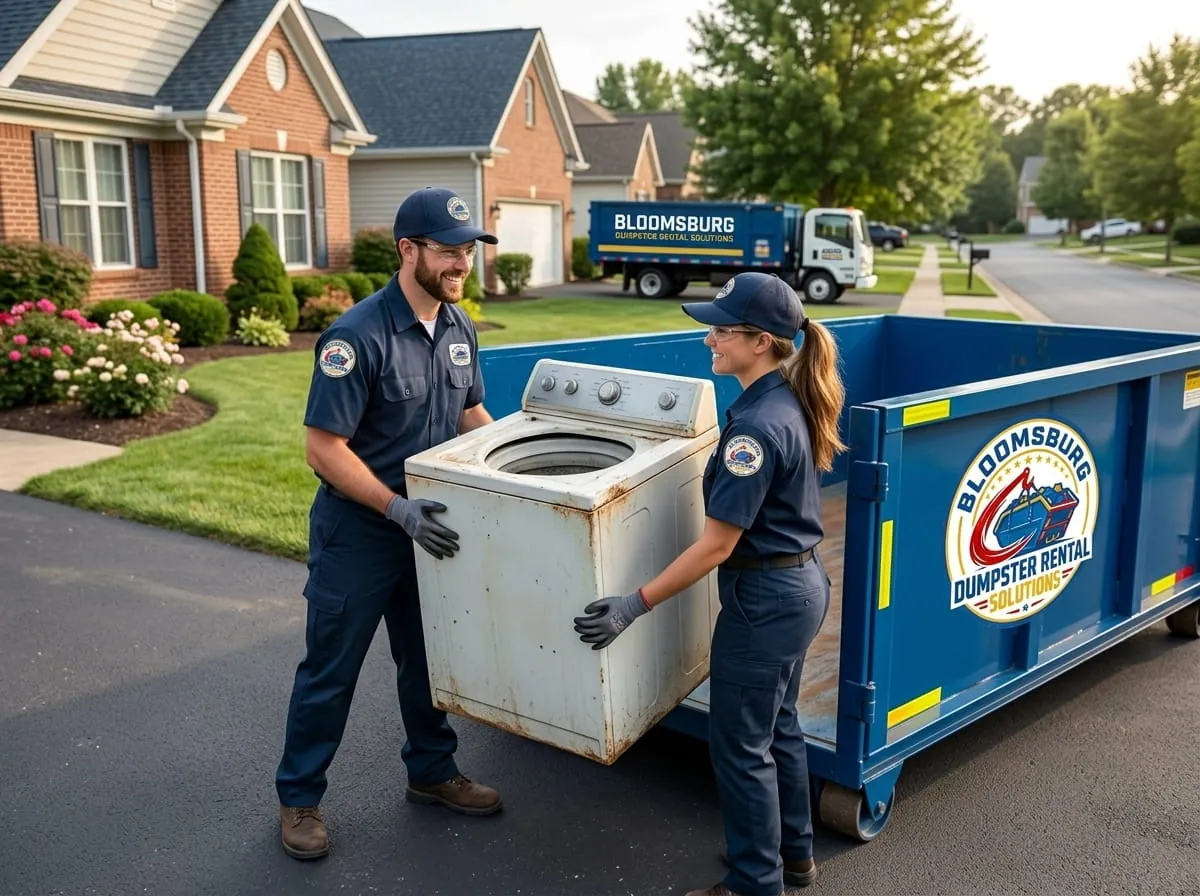
There is a particular kind of tired that comes from a home cleanout. It is not the sore back, though you will have that too. It is the mental fatigue of picking up the same box three times and putting it back down because you cannot decide. I have watched a lot of Bloomsburg families run into this wall, usually somewhere around hour two in the basement, and the fix is almost always the same: stop working room by feeling, and start working room by plan.
This checklist is that plan. It moves through a house the way we actually clear one, from the spaces that fill a container fastest to the rooms that need a gentler hand. It is written for the housing stock we have around here, which means a lot of homes built before 1950 with real basements, walk-up attics, and eighty years of stuff layered into them. If you are staring down a whole-home cleanout in Columbia County, work the rooms in this order and the pile stops being an argument.
Before you touch a single box: the three-pile rule
Every item in the house lands in one of three places. Keep, donate, toss. That is the whole system, and the trouble starts the moment you invent a fourth pile called "maybe." Maybe is where cleanouts go to die. If you cannot decide in about five seconds, the item is not important enough to keep, and it goes to donate or toss.
Set up physically before you start. Stage donation boxes near the door you will load a car from. Keep a couple of contractor bags per room for trash. And get your dumpster on site first, not halfway through, because nothing kills momentum like a full garage and nowhere to put the next armful. Have the container in the driveway before you open the first closet and the whole job speeds up.
The garage: start here, always
The garage is the right first room for a reason. It is mostly low-emotion stuff, it is bulky, and clearing it early gives you a staging area for everything else. Pull everything to the center or the driveway so you can see the walls. You will find the usual Central PA garage inventory: dried-out paint cans, a dead push mower, bald tires, warped plywood scraps, and coils of extension cord that stopped working during the Clinton administration.
Keep the tools you have used in the last two years. Toss anything broken you have been "meaning to fix." Two exceptions worth flagging now, because they follow you through the whole house: paint and chemicals do not go in a dumpster, and neither do tires. Latex paint can be dried out with kitty litter and thrown away once solid; oil-based paint and solvents go to a household hazardous waste event. Columbia County runs collection days for exactly this, so set those items aside in a corner instead of sneaking them into the pile.
The basement: the big one in an old PA home
If you own a pre-war home here, the basement is where the real volume lives, and it is usually the room that decides your dumpster size. Old basements collect in a specific way. Storm windows nobody has hung since the aluminum ones went in. Canning jars by the case. A workbench with fifty pounds of rusted hardware in coffee cans. Sometimes a defunct coal bin or an old oil tank taking up a corner.
Damp is your enemy down here, and it does your sorting for you. Cardboard that has been sitting on a stone or dirt floor for a decade is compromised, and anything stored in it usually is too. Musty books, water-stained linens, particle-board furniture that has swelled at the seams: these are toss items, full stop. Do not donate what a charity will only have to throw out. Be honest about mold too. If it smells like a cave, bag it and let it go.
Watch for the things that need a professional eye before they hit a container. A working home has no business dumping an old furnace, a water heater, or a buried oil tank into a roll-off without a plan. Those come out separately. For the sheer bulk of a full basement clear, a bigger container earns its keep, and this is where a lot of folks in town lean on our junk removal service to get the heavy dead weight up the stairs and gone in one go.
The attic: work it cool and careful
The attic in an older Bloomsburg home is a walk-up or a pull-down into an unfinished space with plank flooring and knee walls. Two rules up here. Work it in the morning before the roof turns the space into an oven, and mind your footing on old joists. This is where the sentimental heavy lifting happens: boxes of photos, kids' school work, holiday decorations three generations deep, a wedding dress in a yellowed box.
Give yourself permission to be quick with the truly ruined and slow with the truly personal. Insulation dust and heat degrade paper and fabric, so a lot of what is up there has already made your decision for you. What survives, sort into keep boxes you will actually go through later, and be ruthless about volume. Nobody needs eleven boxes of decorations. Broken artificial trees, cracked ornaments, and mouse-chewed anything all go down the stairs and into the pile.
The kitchen: fast wins and hidden weight
Kitchens clear faster than people expect. Small appliances you forgot you owned, mismatched Tupperware with no lids, a drawer of takeout menus from restaurants that closed. Donate duplicate dishes and working small appliances. Toss anything cracked, chipped, or non-stick that has lost its coating.
The weight surprise in a kitchen is cast iron, stoneware, and old countertop appliances, plus the cabinets themselves if you are gutting. If a kitchen remodel is part of your cleanout, old cabinets and laminate counters add up in a hurry and change your sizing math.
Bedrooms and closets: the endurance rooms
Bedrooms are where the three-pile rule earns its pay, because clothing is a decision machine. Do the fast version. If it does not fit, is stained, or has not been worn in a year, it leaves. Wearable clothes and linens donate well and keep an astonishing amount out of the landfill. Worn-out mattresses, box springs, and broken bed frames are the bulk items here, and a sagging mattress takes up more room in a container than people plan for.
Closets hide the slow stuff: shoeboxes of cords, old electronics, dead phones. Electronics do not belong in a dumpster in Pennsylvania. Old TVs and monitors especially need to go to an e-waste drop-off, and setting them aside now saves you a headache at the container.
Somewhere around this point in a whole-home job, most people hit the wall I mentioned at the top. If you would rather hand off the heavy end, we are local and we answer the phone: call (272) 203-8539 and we will get a container to your driveway, or handle the load-out for you.
What actually needs a dumpster, and what does not
A roll-off is the right tool for high-volume, mixed household junk: furniture, carpet, drywall from a small demo, general clutter, yard debris, and the endless boxes. It is the wrong tool, and often illegal, for a short list you should memorize before you start.
- Keep out: paint and solvents, motor oil, propane tanks, tires, car batteries, most electronics and TVs, appliances with refrigerant (fridges, freezers, AC units), and anything labeled hazardous.
- Fine to load: furniture, mattresses, wood, drywall, flooring, roofing in limited amounts, general trash, and clean fill in the right container.
When in doubt, ask. It is a two-minute phone call versus a rejected load or an overweight fee, and we would rather tell you up front.
Sizing a container for a whole-home cleanout
Here is the honest guidance after a lot of these jobs around Columbia County. For a single garage or one packed room, a 10-yard container usually does it. For a couple of rooms plus a basement, step up to 15 yards. But for a genuine whole-home cleanout, especially an older home with a full basement and attic, the 20-yard dumpster is the workhorse and the size I steer most families to. It holds the bulk furniture, it swallows a basement, and its lower walls make loading heavy items far easier than reaching over the side of a tall container.
A quick reality check: it is almost always cheaper to right-size up front than to fill a small container, pay for a swap, and start over. If you are on the fence between two sizes for a full house, take the bigger one. The extra capacity costs less than the second haul, and an old PA home has a way of producing more than you estimated.
Estimate by rough thirds. Furniture and mattresses eat the most volume, so tally those first: beds, couches, dressers, and tables. Then the basement dead weight. Then everything else. If those three groups feel large, you are in 20-yard territory.
A workable weekend order
Put it together and a full cleanout has a rhythm. Friday evening, container arrives and you clear the garage to make a staging lane. Saturday morning while it is cool, hit the attic, then move to the basement for the heavy volume. Saturday afternoon, kitchen and the fast bedroom passes. Sunday is closets, final sorting of the keep boxes, and the donation run before the charities close.
Work top-down and heavy-first, keep the three piles honest, and stage your hazardous and electronic items in one corner so they never end up in the pile by accident. Do that, and a house that felt like a month of work is mostly gone by Sunday night.
If you want a hand figuring out the right size or you are ready to book, reach out through our contact page or call and we will talk it through. We have been clearing out homes in Bloomsburg and across Columbia County long enough to know what your basement is hiding.

Founder, Bloomsburg Dumpster Rental Solutions — sharing straight advice from more than 15 years of local hauling experience.