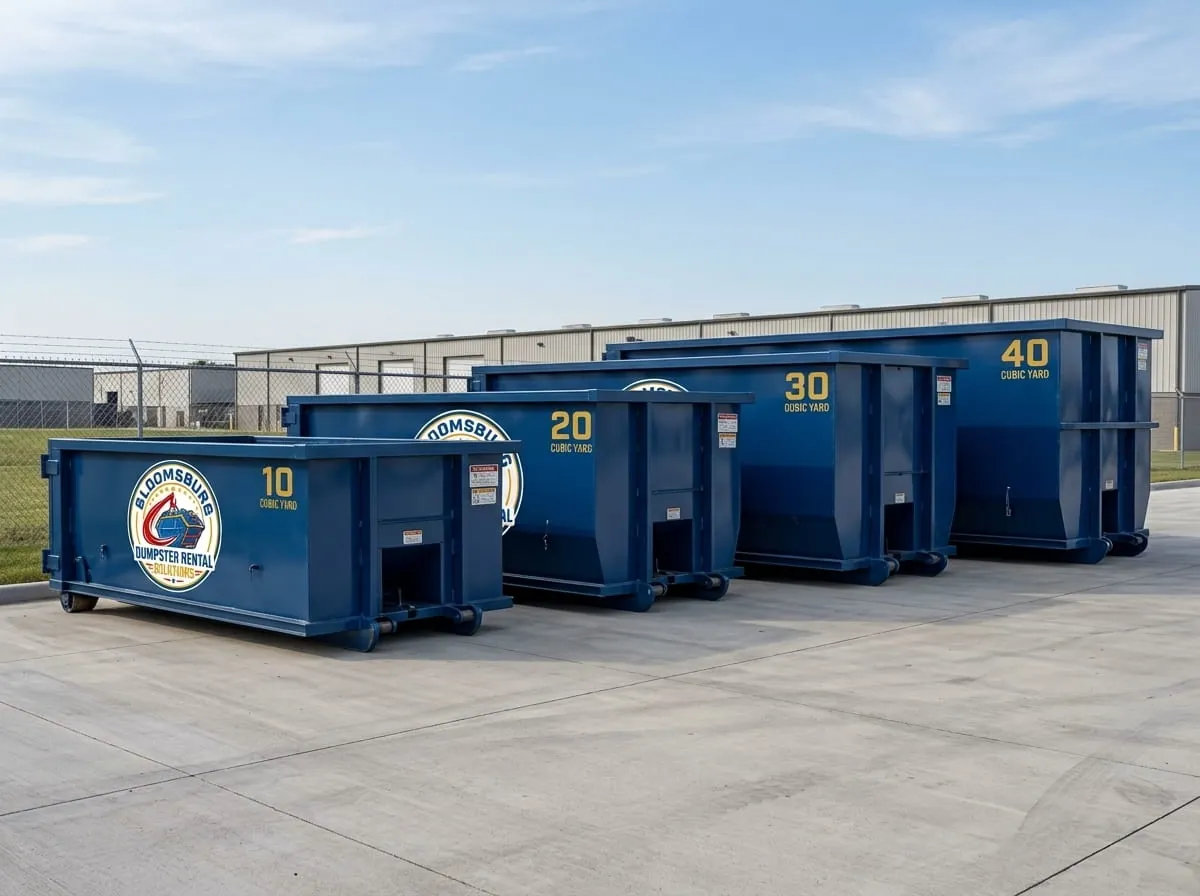
If you've ever stood in a driveway staring at a pile of torn-out kitchen cabinets, snapped studs, and a heap of shingles, wondering how any of it is supposed to disappear, you're in good company. I've been renting roll-offs to folks around Bloomsburg and out through Columbia County for a long time now, and the single biggest thing that trips people up isn't the dumpster itself. It's what goes in it, and how.
Construction and demolition debris (the trade calls it C&D) isn't one thing. It's wood, drywall, metal, roofing, concrete, insulation, wire, old carpet, and a dozen other materials that all behave differently once they hit a container. Toss them in blind and you can end up with an overweight load, a rejected haul, or a bill that's two or three times what you expected. Sort with a little intention and the whole job gets cheaper, safer, and faster. Here's how we do it.
Start by knowing your materials
Before you rent anything, walk the job and take stock of what you're actually throwing away. C&D breaks down into a handful of buckets, and each one has quirks worth understanding.
Wood. Framing lumber, sheathing, trim, subfloor, old fencing, pallets. It's bulky but light for its volume, which is exactly what you want in a roll-off. A container full of clean, broken-down wood rarely gets you in weight trouble. Watch for pressure-treated and painted wood, though — those are handled differently and can't go into a clean-wood recycling stream.
Drywall. Gypsum board is deceptive. A stack of it looks manageable, then you lift a single 4x8 sheet and remember it's around 50 to 70 pounds. Demo out a couple of rooms and you've got real tonnage. Drywall also crumbles into dust that packs down dense, so it eats into weight allowances quietly.
Metal. Ductwork, old appliances (minus the refrigerant units), steel studs, rebar cutoffs, copper and aluminum scrap. Metal has value. Pulling it out and hauling it to a scrapyard separately can put money back in your pocket instead of costing you disposal fees.
Roofing. Asphalt shingles are the heavyweight champion of surprise. One "square" (100 square feet) of tear-off can run 250 to 400 pounds depending on how many layers are up there. A typical Bloomsburg-area re-roof produces far more weight than homeowners expect.
Concrete, brick, block, and dirt. This is the category that sinks people. It is extraordinarily heavy — a small pile can max out a full-size container by weight while barely covering the floor. This material almost never belongs mixed in with your general debris, and I'll come back to why.
Roll-off vs. dedicated heavy-debris bin
Here's the distinction that saves the most money on any renovation or demo. A standard roll-off dumpster — the 15, 20, or 30-yard containers most people picture — is built for mixed, bulky, relatively light C&D. Wood, drywall, roofing (in reasonable amounts), siding, insulation, fixtures, and general construction junk. For most remodels, additions, and cleanouts, a construction dumpster rental is the right tool, and one container handles the whole job.
Concrete, brick, block, asphalt, stone, and dirt are a different animal. These need a dedicated heavy-debris bin, which is almost always a smaller container (often a 10-yard) with a weight allowance and a flat pricing structure suited to dense material. Put concrete in a 30-yard and try to fill it, and no truck on earth will legally or safely haul it — you'd be looking at 15 to 20 tons. That's why concrete and heavy debris gets its own container and its own rate. Keep those materials separate from your general C&D from the very first swing of the sledgehammer and you avoid the single most expensive mistake in this business.
The short version: if you can pick it up without a strain, it probably belongs in a roll-off. If it makes you grunt, it probably belongs in a heavy-debris bin.
Weight limits, and how debris type drives your size
Every roll-off comes with a tonnage allowance baked into the price. Go over it and you pay per ton for the excess. That's not a gotcha — it's physics. The truck has a legal road weight, and the landfill charges us by the scale ticket. So the smart move is matching your container size to the weight of your debris, not just the volume.
This is where material type matters more than square footage. Two examples from real jobs:
- A garage full of old furniture, drywall scrap, and light wood might fill a 30-yard container and still come in comfortably under the weight cap. Volume-limited job — go big.
- A single-layer shingle tear-off on a modest roof might only need a 15 or 20-yard by volume, but the weight will be substantial. Weight-limited job — size down and don't overfill.
My rule of thumb: heavy, dense materials (roofing, plaster, tile, wet debris) push you toward a smaller container that you fill partway. Light, bulky materials (clean wood, cardboard, insulation, fixtures) let you go big and pack it full. When in doubt, tell whoever you're renting from exactly what you're throwing out. A good operator will size it for you in about thirty seconds. If you're not sure, call us at (272) 203-8539 and describe the job — we'd rather spend two minutes on the phone than have you eat an overage charge.
Pennsylvania disposal rules, in plain terms
Pennsylvania regulates solid waste through the DEP, and while the full regulations are a thick book, the practical points for a construction job around Columbia County come down to a few things.
First, C&D debris has to go to a permitted facility — a licensed landfill, transfer station, or processing facility. You can't burn it, bury it on-site, or dump it down a bank. That last one sounds obvious, but illegal dumping citations get written every year in rural stretches of the county, and the fines dwarf what a container would have cost.
Second, certain materials are banned from ordinary C&D disposal and have to be handled separately. Asbestos is the big one — common in older Bloomsburg homes in floor tile, pipe wrap, and some siding. If you suspect it, stop and get it tested before you disturb it; abatement is a regulated, licensed process, not a dumpster job. Other no-gos include liquid paints and solvents, automotive fluids, tires, batteries, fluorescent tubes, and appliances containing refrigerants (fridges, freezers, AC units, dehumidifiers). These need their own disposal routes, and a reputable hauler will tell you up front what they can and can't take.
Third, keep your debris "clean" in the regulatory sense — construction materials only. The moment general household trash, food waste, or hazardous items get mixed in, the load can be reclassified, refused, or surcharged at the scale. Keep the roll-off for the renovation and use your normal municipal service for household garbage.
Keeping the job site safe and compliant
A debris pile is a hazard until it's in a container, and a sloppy site is where injuries and code problems start. A few habits keep things tight:
- Pull nails and break down material as you go. A protruding nail in a board on the ground is a puncture wound waiting to happen. Flattening framing and stacking it also lets you fit far more in the box.
- Load evenly and never above the rails. Debris mounded over the top edge can't be tarped, can't be legally hauled, and will get your load left behind. Fill corners, keep it level, and keep the heavy stuff low and centered.
- Mind the placement. Set the container on a firm, level surface — a driveway or a laid-down sheet of plywood protects the pavement. Keep it clear of overhead lines and out of the public right-of-way. If it has to sit on a Bloomsburg street, check whether the borough requires a permit first.
- Contain the small stuff. Dust, wrappers, and offcuts blow into the neighbor's yard fast. A little daily cleanup keeps you on good terms and out of code-enforcement's inbox.
Recycle the clean materials
Not everything in that pile is trash, and pulling out the recyclables shrinks your disposal weight and sometimes your bill. Clean, uncontaminated materials that recycle well include:
- Metal — nearly always worth separating for scrap value.
- Clean wood — untreated, unpainted lumber can be ground for mulch or biomass.
- Concrete and masonry — often crushed and reused as aggregate or fill, which is another reason keeping it in a dedicated bin pays off.
- Cardboard — all that packaging from new fixtures and materials.
- Shingles — in some markets asphalt shingles get recycled into road paving.
The trick with recycling is that these streams only work when the material stays clean. One bin of mixed junk is landfill-bound; a bin of sorted metal or clean concrete has somewhere better to go. Even if you're renting a single mixed container, separating out the obvious high-value or high-weight items before they go in is almost always worth the ten minutes.
The bottom line
Disposing of construction debris the right way isn't complicated once you think in materials instead of "a pile of stuff." Separate the heavy from the bulky, keep the banned items out, match your container to the weight of what you're throwing away, and pull the recyclables before they're buried. Do that and you'll spend less, stay compliant with PA rules, and keep the job site safe from start to finish.
If you're planning a project anywhere in Bloomsburg or Columbia County and you're not sure what size or type of container you need, just reach out and ask. Tell us what you're tearing out, and we'll tell you exactly what to put it in.

Founder, Bloomsburg Dumpster Rental Solutions — sharing straight advice from more than 15 years of local hauling experience.