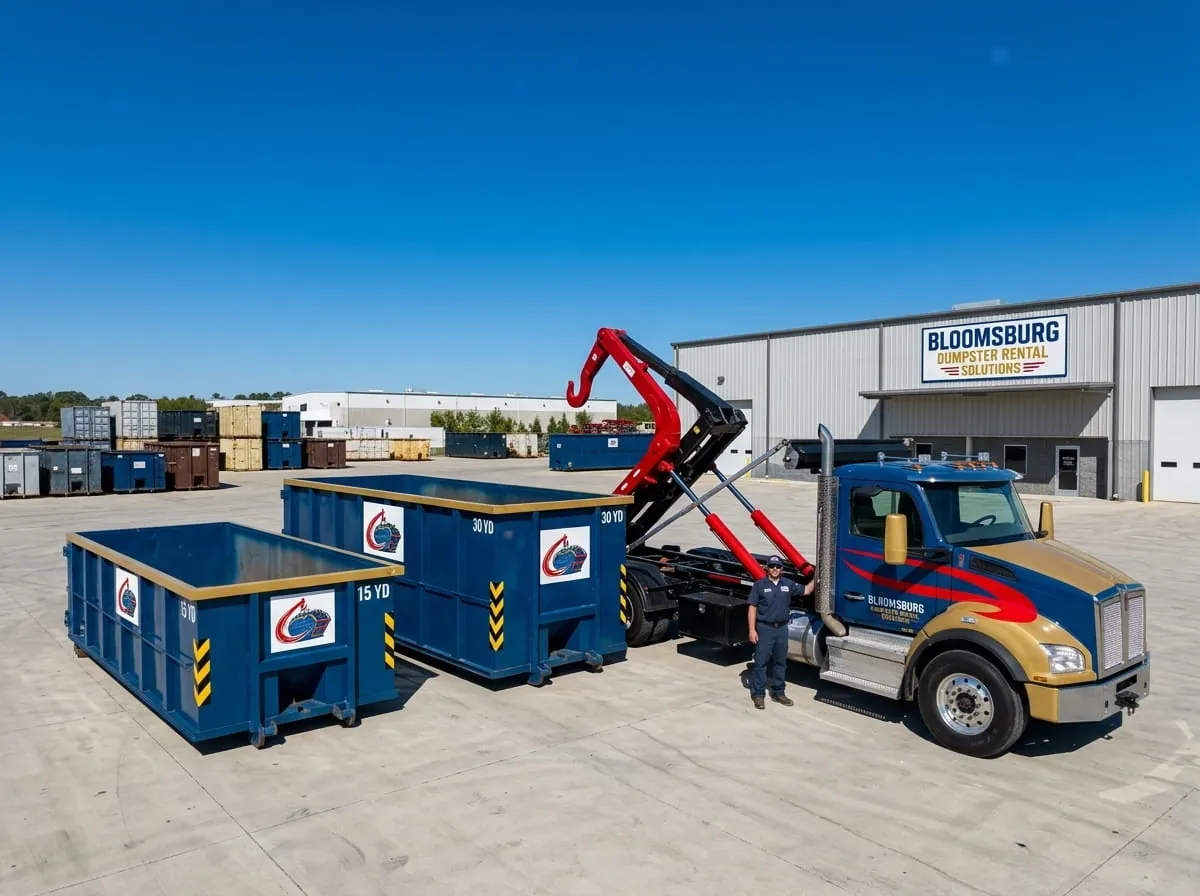
Ask anyone who has run roll-off boxes around Columbia County for a few winters and they'll tell you the same thing: the dumpster almost never damages a driveway. The way it gets set down does. I've watched a perfectly good asphalt apron in the Fernville area take a gouge the size of a dinner plate because a wheel sat in one spot for eleven days in July, and I've seen a fifty-year-old concrete drive off Market Street come through a full kitchen gut without a mark on it. The difference wasn't luck. It was a couple of two-foot pieces of plywood and thirty seconds of thought before the box came off the truck.
This article is the whole picture — why heavy containers do what they do to a driveway, what actually protects the surface, where to put the box, and what a real local company handles for you without being asked. If you're planning a project in Bloomsburg or anywhere in the county, read this before the truck shows up.
Why a roll-off is hard on your driveway in the first place
A roll-off dumpster looks like it just sits there. It doesn't. It works your surface in three separate ways, and each one leaves a different kind of mark.
First, weight in a small footprint. An empty 20-yard box already runs a couple thousand pounds. Load it with shingles, wet drywall, or old concrete and you're pushing well past ten thousand. All of that lands on four small rear wheels and a pair of steel rails at the front. The pressure per square inch under those contact points is enormous — far more than a parked car, which spreads its load over four wide tires. That concentrated load is what cracks and depresses a surface.
Second, heat plus time. Asphalt is not a rigid material. On a hot Central PA afternoon the top layer softens, and a steel wheel resting on soft asphalt will slowly press in and leave a permanent dimple or rut. The longer the box sits, the deeper it goes. This is why a dumpster left three weeks in August does more damage than the same box left three days in October.
Third, the drop and the drag. The two moments of highest risk are delivery and pickup. When the driver rolls the box off the tilt bed, the rear edge and wheels touch down and the container slides into place. When it's picked up, it gets winched back up the same way. A careless drag across bare asphalt or concrete can scrape, and a hard set-down can chip an edge. Good drivers control both. But even a good driver benefits from something protective under the contact points.
Asphalt versus concrete — they fail differently
Knowing your surface tells you what you're guarding against.
Asphalt is flexible and heat-sensitive. Its failure modes are ruts, dimples, and dents under sustained point loads, plus scuffing during delivery. Older asphalt that's already a little brittle and dry can also crack at the edges. The good news: asphalt is forgiving about staining and easy to protect with boards.
Concrete is rigid and strong in compression, so it rarely dents. What concrete does instead is crack and stain. A hard point load over an existing hairline crack or a control joint can widen it. And concrete is porous — hydraulic fluid, rust bleed off steel wheels, or a leaking oil pan on the truck will soak in and leave a brown or black shadow that's genuinely hard to remove. Decorative, stamped, or sealed concrete deserves extra caution because the surface finish is part of the value.
The fix that actually works: boards under the contact points
Here's the single most effective thing you can do, and it costs almost nothing. Put wood down between the dumpster and your driveway.
The purpose of the wood is to spread the load and to separate the steel from your surface. Instead of ten thousand pounds pressing through four small wheels, that force gets distributed across a much larger area, dropping the pressure per square inch to something your driveway can shrug off. The wood also takes any staining, scuffing, or heat transfer so your driveway doesn't.
What to use:
- Two-by-tens or two-by-twelves, about two to three feet long, are ideal under each wheel and under the front rails. Solid dimensional lumber holds up under real weight.
- Three-quarter-inch or thicker plywood works well too, especially doubled up. Avoid thin, flimsy sheet goods — a quarter-inch panel will crack and do nothing.
- Skip cheap pallets. They splinter and collapse under a loaded box and can actually make things worse.
Placement matters. You want a board squarely under each of the four rear wheels and under the two front contact rails — six points, roughly. The boards should be flat, stable, and not teetering on an edge or a slope. If your driveway pitches, let the driver know so the box is set with the wheels chocked and level. On a hot day, boards under asphalt matter even more, because they stop the wheel from ever touching the softened surface.
One more small thing that pays off: a sheet of plywood or an old piece of OSB laid flat under the whole rear of the box catches drips and gives you a clean staging area. It's cheap insurance for concrete especially.
Where to put the box — placement is half the battle
The best protection is sometimes not putting the box on the vulnerable surface at all. Before delivery, walk your property and think it through.
- Gravel, a level side yard, or the street are all gentler on your wallet-worth than a nice driveway. In Bloomsburg borough you may need a right-of-way or street-placement permit to set a container on the road, so check before you assume the street is an option — a good company will know the local rules.
- If it has to go on the driveway, put it on the thickest, most supported section — usually nearer the garage or the street apron — rather than an unsupported edge that can crack.
- Keep it clear of gas meters, septic lids, well caps, and shallow utilities. Concentrated weight over a buried line is a bad day.
- Mind low branches and wires overhead. The truck bed tilts high during drop-off and needs clearance.
- Leave the driver a straight, backing-friendly approach. The less maneuvering on your surface, the less scuffing.
Placement is also where a lot of homeowners over-order size and pay for it in driveway wear. A box bigger than you need sits heavier and longer. Right-sizing the container for the job — a topic worth a quick phone call — protects both your surface and your budget. That's as true for a garage cleanout as it is for a full residential dumpster rental during a remodel.
Freeze-thaw and older Central PA driveways
This region hands driveways a beating that a lot of national advice ignores. Columbia County goes through real freeze-thaw cycles — water works into hairline cracks and joints, freezes overnight, expands, and pries the crack a little wider every cycle. Come spring, that's how small cracks become potholes.
What that means for a dumpster: if you're renting in late fall, winter, or early spring, an existing crack under a loaded box is exactly where freeze-thaw plus point load will do the most harm. Boards spread the load off that weak spot. And if there's snow or ice, get it cleared under and around the placement area first — a box set on ice will shift as it melts, and a shifting loaded container drags across your surface.
Older driveways deserve extra respect, and there are a lot of them around here. A lot of Bloomsburg's housing stock is decades old, and so is the asphalt in front of it. Aged asphalt is drier, more brittle, and thinner than it once was after years of resealing. Older concrete often has existing cracks and worn control joints. None of that means you can't put a dumpster on it — it means boards aren't optional, placement matters more, and you don't leave the box a day longer than the project needs.
If you're weighing all this and want a straight answer for your specific driveway, call us at (272) 203-8539 and describe your surface and your project. Two minutes on the phone saves a repair bill.
What a good dumpster company does automatically
You shouldn't have to manage all of this alone. The whole point of hiring a local operator instead of a faceless national dispatch is that the details get handled. Here's what you should expect a good company to do without you asking:
- Ask about your surface when you book — asphalt, concrete, gravel, sealed or decorative — and plan accordingly.
- Bring and place boards under the wheels and contact points as standard practice, not as an upsell.
- Deliver with drivers who know how to set a box gently — controlled roll-off, no dragging, wheels chocked and level.
- Maintain their trucks and containers so you're not gambling on a hydraulic or oil leak staining your concrete.
- Right-size the container to your job so you're not carrying more weight and more days than necessary.
- Know the local permit rules for street placement in the borough and the surrounding townships.
- Pick up promptly when you're done, because time on the surface is the enemy.
That standard of care is exactly what we build our roll-off dumpster rental service around. Protecting driveways isn't a favor — it's just doing the job right the first time.
A simple checklist before the truck arrives
- Clear the placement area of cars, snow, ice, and debris.
- Have six sturdy boards ready if you're supplying your own — or confirm the company brings them.
- Pick a spot with good support, off the vulnerable edge, clear of meters and utilities.
- Mark any known cracks, soft spots, or buried lines for the driver.
- Right-size the box so it isn't heavier or on-site longer than needed.
- Schedule pickup for as soon as the project wraps.
Do those six things and the odds of any driveway damage drop close to zero. Skip them and you're rolling dice on your surface.
The bottom line
A dumpster rental should leave your driveway exactly the way it found it. The physics are simple — concentrated weight, heat, and time are the threats, and spreading the load with wood plus smart placement neutralizes all three. Central PA freeze-thaw and older local driveways raise the stakes, but they don't change the playbook. Boards down, box placed well, right size, prompt pickup. Handle those and your surface is safe.
If you want it handled by people who've been setting boxes on Columbia County driveways for years, reach out through our contact page or call. We'll set your box down right.

Founder, Bloomsburg Dumpster Rental Solutions — sharing straight advice from more than 15 years of local hauling experience.