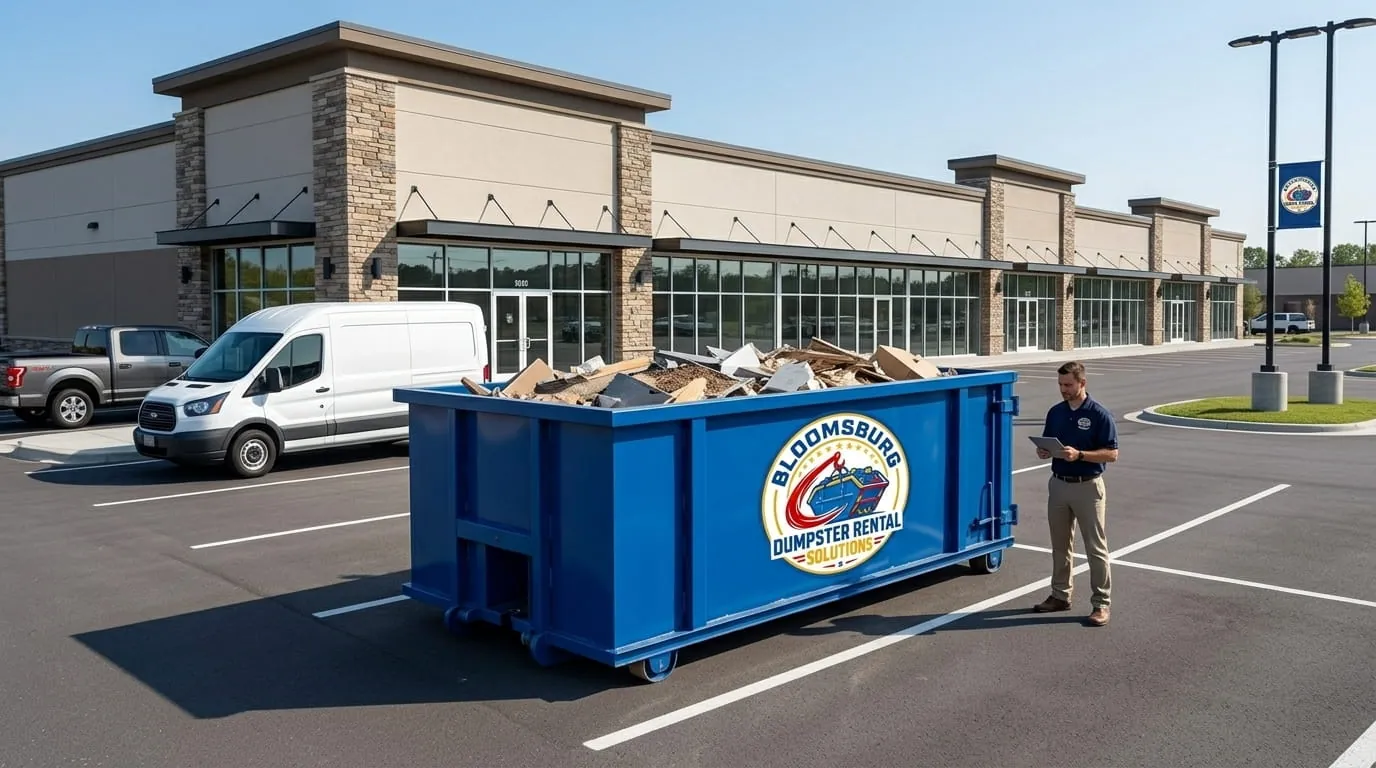
After enough years hauling roll-offs around Columbia County, you learn that the single biggest source of headaches isn't the size of the load or the weather on delivery day. It's what people put in the box. A dumpster looks like it'll swallow anything, and most of the time it will. But there's a real difference between what a container can hold and what the transfer station out on the way to Danville will actually let us tip. Get that wrong and you're looking at overage fees, a rejected load, or a truck that leaves your driveway heavier than the law allows.
So let's walk through it the way I'd explain it to a neighbor over the tailgate. What goes in, what stays out, and the gray-area stuff that trips people up every single week here in Bloomsburg.
The easy yes: what a roll-off is built for
Most of what fills our containers is exactly what you'd expect, and none of it causes a second thought. General household junk is the bread and butter. When folks clean out a basement that's been collecting since the Agnes flood stories were still fresh, or empty a parent's house before a sale, that's the load we run all day long. Boxes, old toys, worn-out clothing, broken shelving, the mystery bags from the back of the closet — all fine.
Furniture is welcome too. Couches, mattresses, dressers, tables, that recliner nobody wants to admit is done. Bulky, awkward, and a pain to move, but perfectly acceptable in the box. If you're doing a whole-house cleanout and the volume is more than you want to sort and haul yourself, that's often where a dedicated junk removal job makes more sense than wrestling everything to the curb.
Construction and remodeling debris is the other big category. Drywall, old lumber, subfloor, trim, cabinets, countertops, roofing shingles, siding, insulation, tile — the wreckage of any decent renovation. If you're gutting a bathroom or tearing off a back porch, the roll-off is doing exactly the job it was designed for. Just keep in mind that shingles and plaster get heavy fast, and we'll talk about weight in a minute.
Yard waste is generally fine as well, and there's plenty of it in this part of Pennsylvania. Branches, brush, shrubs, leaves, sod, and the general aftermath of clearing an overgrown lot. Small stumps usually pass; the truck-tire-sized ones are a conversation. One thing worth knowing up front: yard debris sometimes has to go in its own container or be kept clean of trash, because a load of pure organics can be routed to composting instead of the landfill. When you book, tell us it's mostly brush and we'll sort out the right setup.
The hard no: keep these out of the box
This is the part I wish everyone read before loading day, because it's where the trouble lives. There's a whole class of material that's flat-out prohibited, and it's prohibited for good reasons — worker safety, groundwater, and Pennsylvania's disposal regulations that the transfer stations answer to.
Hazardous waste is the headline. Anything corrosive, flammable, toxic, or reactive stays out. That means solvents, pool chemicals, pesticides, herbicides, motor oil, gasoline, and cleaning chemicals in bulk. If the container it came in has a skull, a flame, or a long warning paragraph on the back, assume it doesn't belong in the roll-off.
Paint is the one that catches almost everyone. Liquid or partial cans of latex and oil-based paint, stain, and lacquer are not allowed loose in the box. Pennsylvania actually runs a paint stewardship program — PaintCare — with drop-off sites that take leftover architectural paint for free, and that's the right home for it. If you've got latex paint you're desperate to toss, drying it out completely with hardener or kitty litter until it's solid can make the empty can acceptable as regular trash, but the wet stuff never rides along.
Tires are a no. They're banned from landfills across the state and have to be recycled through a tire dealer or a scrap program. Same story with batteries — car batteries, and the rechargeable lithium packs out of tools and electronics. Those lithium cells are a genuine fire risk in a packed container or a compactor truck, so they're a hard line, not a suggestion.
Electronics are covered by Pennsylvania's Covered Device Recycling Act. Televisions, computers, monitors, laptops — the law keeps them out of the trash stream and points them to e-cycling. We can't tip a load with a TV buried in it, so pull the electronics before the box gets loaded.
Appliances are a yes-and-no. Plain metal appliances like a water heater, a dryer, or a stove are usually fine and even valued as scrap. But anything with refrigerant — refrigerators, freezers, air conditioners, dehumidifiers — cannot go in as-is. The freon has to be professionally recovered and certified first. If you've got a fridge to lose, let us know and we'll steer you to the right path rather than have it kicked back at the scale.
Round out the no list with a few more: asbestos, medical or biohazard waste, propane tanks and other pressurized cylinders, and railroad ties soaked in creosote. None of it belongs in a roll-off.
Heavy material: right idea, wrong box
Here's the distinction that saves people the most money. Concrete, brick, block, stone, asphalt, and dirt are all perfectly disposable — they just can't ride in a standard mixed-debris container without blowing past the weight limit and, honestly, the legal load limit for the truck on Bloomsburg's roads.
A cubic yard of concrete runs a couple thousand pounds. Fill a big roll-off with it and you've got a load no truck should legally carry and no transfer station will take at a flat rate. That's why we run dedicated bins for the heavy stuff. If you're breaking up an old patio, a sidewalk, a foundation, or hauling out a pile of fill dirt, you want a smaller, purpose-sized container for concrete and heavy debris. It keeps the weight legal, the pricing straight, and the material headed to a recycler that'll crush the concrete back into aggregate instead of burying it.
The mistake I see is folks tossing a few chunks of concrete into a general renovation load "just to get rid of it." A little bit, buried in a light load, sometimes flies. A layer of it on the bottom of the box is how a dumpster ends up too heavy to move. When in doubt, ask. It costs nothing to plan it right, and a wrong guess costs real money.
Not sure which bucket your material falls into? Call us at (272) 203-8539 and just describe what you're getting rid of. Two minutes on the phone beats a rejected load every time.
A word on Pennsylvania's rules, in plain terms
You don't need to memorize regulation numbers, but it helps to understand why the lines are drawn where they are. Pennsylvania's Department of Environmental Protection sets what can be landfilled, and the transfer stations and landfills we haul to answer to those rules directly. Certain materials are banned from disposal outright — tires, batteries, and covered electronics among them — because the state built recycling pathways for them instead. Others, like appliances with refrigerant, are restricted until they're properly prepped.
The practical upshot for you is simple. The container isn't the final destination; the scale house is. Whatever we pick up gets weighed and inspected, and if there's prohibited material in it, the whole load can get flagged. Keeping the box clean of the banned stuff isn't us being fussy — it's us keeping your job moving and your bill predictable.
Load it smart
A couple of habits make everything easier. Break down what you can — collapse boxes, snap apart furniture — so you're not paying to haul air. Keep the load level with the top rail; anything mounded over the sides can't be legally tarped and hauled, so we can't take it. Distribute weight across the floor of the container instead of piling it all at one end. And keep the heavy material separate from the start if you know you've got concrete or dirt in the mix.
One more thing on the heavy stuff: clean, separated concrete and brick is often worth more than nothing at the recycler, whereas the same material mixed into a trash load is pure cost. Sorting it out isn't just about weight limits — it can genuinely change what the job costs you. That's true for clean scrap metal too, which is why pulling appliances and metal out ahead of time can pay off rather than burying them in a mixed pile.
And if you're ever unsure whether a whole category belongs in a container at all, that's usually the sign the job is bigger than a single box. A hoarder cleanout, an estate clear, a flooded basement — those often mix acceptable junk with a handful of prohibited items and a pile of heavy debris all at once. Sorting that on the fly is exactly what we do.
Most of all, when something gives you pause — that half-can of deck stain, the old dehumidifier, the pile of car tires behind the garage — set it aside and ask before it goes in. We've been doing this in Bloomsburg and across Columbia County long enough to have an answer for just about anything you can dig out of a basement.
Got a project lined up and want to be sure you're getting the right container for what you're throwing away? Reach out and we'll match the box to the job. It's a short conversation that saves a long headache.

Founder, Bloomsburg Dumpster Rental Solutions — sharing straight advice from more than 15 years of local hauling experience.